12 Facts About Langjokull Glacier That Will Surprise You
The short answer
Langjökull is Iceland's second-largest glacier by twenty-five square kilometres, it has lost sixty-six metres of thickness since 1890, and the tunnel cut into it is warmer in January than the air outside. The road that reaches its western base camp is open four and a half months a year. Every figure below has a named source, and three widely repeated ones are missing because nobody who measures the glacier publishes them.
1. Second place is twenty-five square kilometres wide
Náttúrufræðistofnun Íslands puts Langjökull at 820 km² in 2023 and Hofsjökull, the third-largest, at 795. Vatnajökull, first, is 7,600. So the gap between first and second is enormous and the gap between second and third is a rounding error on a body of ice that is actively shrinking.
2. Sixty-six metres of ice have gone since 1890
Researchers at the University of Iceland and the Icelandic Meteorological Office measured the change across the country's ice between 1890 and 2019. Langjökull thinned by about 66 metres and lost about 29 per cent of its volume. The national figure over the same period is almost 16 per cent, so this ice cap is going faster than the average.
3. The tunnel is warmer than the air outside it in winter
Inside, the operator gives the temperature as around 0 °C. On the surface in January the Met Office station nearest the ice cap averages −5.4 °C before the wind is counted. The coldest part of a winter ice cave tour is the walk from the truck to the door.
4. The name is a description, not a legend
Langjökull means "long glacier", and it is: roughly fifty kilometres north to south and far narrower than that across. Iceland names a great many things after sagas and this is not one of them.
5. The road to the western base camp is open four and a half months
Mountain road 550 through Kaldidalur is rough gravel, four-wheel-drive only, and open from June to mid-October. For the other seven and a half months it closes entirely, and everybody reaches the base camp on a shuttle instead — which is why the tunnel runs through a Reykjavik winter without interruption.
6. The old highland crossing opens on 1 June, give or take a fortnight
The Icelandic Road and Coastal Administration publishes an average opening date of 1 June for the Gullfoss to Hveravellir stretch of Kjölur, the route that runs between Langjökull and Hofsjökull. The earliest recent opening was 30 May and the latest was 14 June. Snow cover decides it, not the calendar.
7. You need a driving licence to ride a snowmobile here
Not a special permit — an ordinary full driving licence, carried with you. Every snowmobile listing that states a rule requires one from whoever takes the controls, and one will not accept a solo traveller without one at all. Passengers need nothing, and there is no upper age limit on riding behind somebody.
8. Two people share a snowmobile by default
The price is quoted per person and two travellers ride each machine, swapping halfway if you want to. A single-rider upgrade exists on most tours, it costs extra, and it is paid at base camp rather than at checkout. It is the single most common surprise in the traveller reviews on the reviews page.
9. The glacier feeds the waterfall on the tour brochure
Meltwater off the southern end of the ice cap feeds the river system that produces Gullfoss. When an itinerary puts the Golden Circle and a glacier hour in the same day, it is following the same water an hour apart rather than bolting two unrelated things together. The other stops are on nearby attractions.
10. There is no gate, no ticket and no opening hours
Nobody sells admission to Langjökull, because there is no admission to sell. Every figure you find when you search for a price is a transport fare. The only ticketed thing on the ice cap is the tunnel, and even that is bought from its operator rather than at a door.
11. The minimum age runs from four to eighteen depending on the tour
| Tour | Minimum age | Why |
|---|---|---|
| The ice tunnel | None | A walk on level ground |
| Monster truck onto the ice | 4 | Nobody rides anything |
| Most snowmobile tours | 6 or 8 | As a passenger only |
| The fast-paced ride | 18 | 140-horsepower machines, ten riders |
No child drives a snowmobile at any age. Which tour suits which family is worked through on Langjokull with kids.
12. The ice cave is not a cave
The passage inside Langjökull was cut by machine, and it is maintained continuously because ice moves. That is exactly why you can walk into it in July, when the natural ice caves under Vatnajökull are water. Calling it a cave is the convention; knowing it is a tunnel is what lets you book the right month.
13. The ice cap is why the Golden Circle has a waterfall to show you
This is the fact that reorganises the map in your head. Gullfoss is not near Langjökull by coincidence: the Hvítá that drops into that canyon is carrying meltwater off the southern end of the ice cap. Stand at the falls in July and you are watching last winter's snow leave the glacier.
It also explains why the two show up on the same itinerary so often. A tour that puts the Golden Circle and a glacier hour in one day is following one river upstream rather than bolting two attractions together, and the drive between them is under an hour.
14. Nobody walks onto this glacier alone
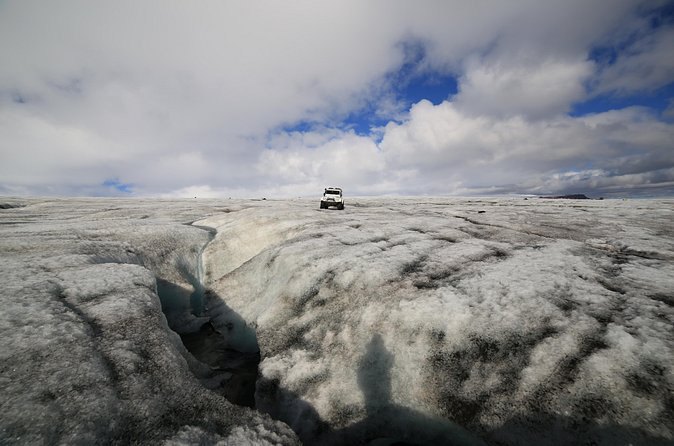
Every route across the surface is led, every vehicle on it is driven by somebody who has been up that week, and the reason is crevasses. They are not fixed features. The fields the trucks pick through move as the ice moves, which is why a driver checks the route rather than following a track.
That is also why there is no self-guided version of any of this and never has been. The fares on Langjokull Tours all include the vehicle and the person driving it, because on an ice cap those are the same purchase.
Three figures you will read everywhere that are not here
- A summit at 1,355 metres. Widely printed, not published by any Icelandic authority in a checkable form.
- A maximum ice thickness. Numbers between 250 and 580 metres circulate; the national inventory does not break one out for this ice cap.
- The year the tunnel was cut. Sources say 2012 and 2015 with equal confidence, and the operator's own site gives no date.
Everything above the line has a source beside it on glacier facts. On a subject where a wrong number gets copied onward for a decade, a shorter list is worth more than a longer one.
Next step: the guides on these tours are the people who explain all of this on the ice — the fares are on Langjokull tour listings.
Where a guide explains it on the ice
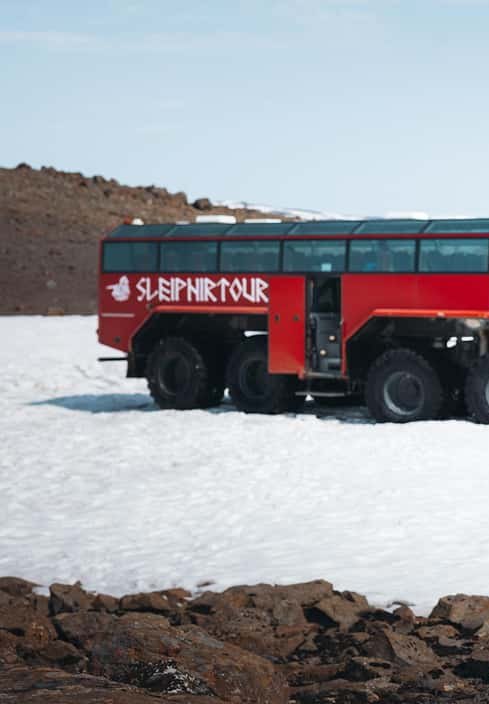
Gullfoss: Sleipnir Monster Truck Tour of Langjokull Glacier
No licence and no minimum age past four: a truck drives you out onto the ice.
From $155 per person
Check Availability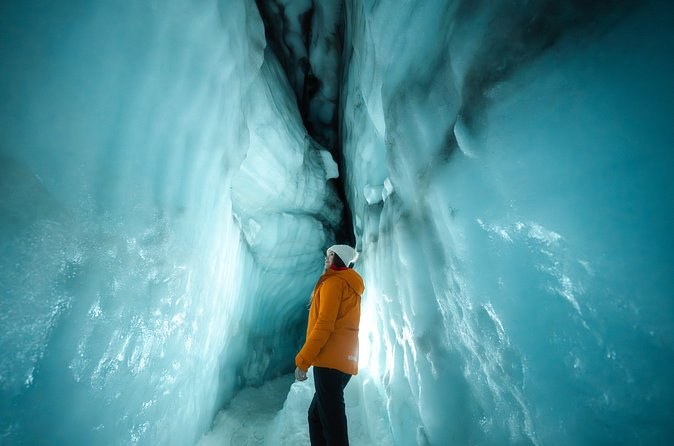
Into the Glacier: Langjokull Glacier Ice Cave from Husafell
An hour inside the tunnel at 1,260 metres, entry fee in the fare.
From $203 per person
Check Availability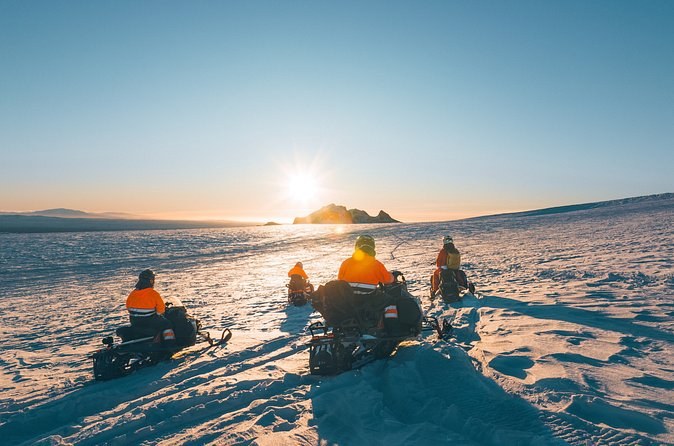
Iceland Golden Circle & Glacier Snowmobiling Guided Experience
A small-group super jeep day that gives Langjokull two hours, not one.
From $386 per person
Check Availability