Langjokull in Winter and Summer: What Changes, and What Does Not
The short answer
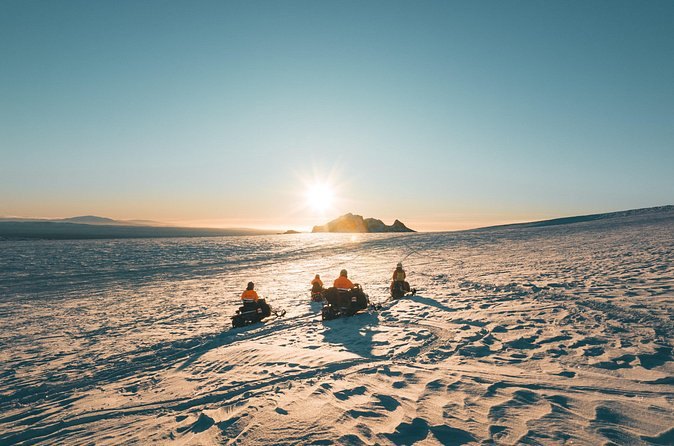
The glacier does not have a season. The tunnel is cut by machine and runs all year, and the snow at 1,200 metres holds through August, so both the ice cave and the snowmobiling are available in every month. What changes is the road on the western side, which is open 1 June to mid-October and covered by a shuttle the rest of the time, and the sky: aurora from late August to early April, a sun that barely sets from May to August.
Does the season decide anything?
Less than it does almost anywhere else in Iceland, and that is the useful thing to know. Travellers arrive assuming a glacier is a winter attraction and an ice cave doubly so, and neither is true here.
What the season decides is three specific things: which road is open, how much daylight you have to spend, and whether the sky above the ice cap is dark enough for the northern lights or bright enough to still be light at midnight. None of those closes the glacier.
What never changes
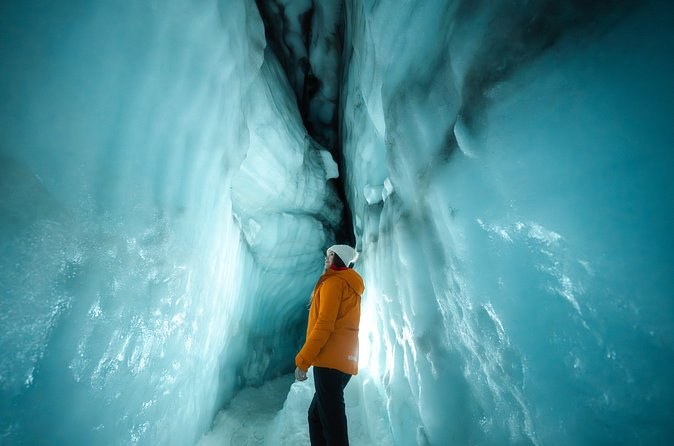
The tunnel, first. It was cut into the ice by machine and is maintained continuously because glaciers move, so it is open every month and its interior sits at around 0 °C whatever the date. That is the single biggest difference between this ice cave and the natural ones under Vatnajökull, which form in autumn and melt out in spring.
The snowmobiling, second. The riding happens at around 1,200 metres, and a warm summer in Reykjavik does very little to snow at that altitude. Travellers report being snowed on at the top of the glacier in August.
And the free cancellation, third: every fare here refunds in full at 24 hours in every month of the year.
What the roads do
| Route | Season | Vehicle | What happens outside it |
|---|---|---|---|
| Reykjavik to Gullfoss (route 35) | All year | Any car | Cleared and open |
| Reykjavik to Húsafell (routes 50/518) | All year | Any car | Cleared and open |
| Húsafell to Klaki (road 550) | 1 June – mid-October | 4×4 only | Shuttle, ISK 2,000 return |
| Gullfoss to Hveravellir (F35) | Opens ~1 June | 4×4 only | Closed |
| Base camp to the ice | All year | Glacier truck | Unaffected |
The bottom row is the one that matters. The last leg of every one of these tours runs on the glacier rather than on a road, so a closed mountain road changes how you get to the base camp and nothing else.
Winter: November to March
The coldest and the darkest, and for many people the best. The Met Office station nearest the ice cap averages −5.4 °C in January and records twelve hours of sunshine across the whole month; February is colder still at −6.2. Reykjavik sits around freezing.
Everything runs. The western tunnel runs on the shuttle from Húsafell and the southern snowmobile departures run off the paved road at Gullfoss. Aurora season is at its strongest, the ice cap is at its most reliably frozen, and there is nobody up there.
Two costs. Departures are built round what daylight exists, so you go when you are told rather than when you prefer. And this is the window with the highest chance of a day being moved for weather.
Spring: April and May
The quiet good months. April is the driest of the year on the ice cap at 43 mm and carries 146 hours of sun; May crosses freezing at 1.5 °C with 171 hours. The light comes back very fast, and by late May the evenings barely end.
The mountain roads are still shut, so the western side is on the shuttle. That is the only practical difference from summer, and it costs ISK 2,000. Snow conditions for riding are still those of March, because a lowland thaw does nothing at 1,200 metres.
Summer: June to August
Both mountain roads open, June carries 188 hours of sunshine (the most of any month), and July is the warmest on the ice cap at 7.9 °C and the driest at 46 mm. This is the busiest window and the short departures from the city fill first.
It is also the window in which the tunnel does its most useful work, because it is the only ice cave in Iceland you can walk into in July. If somebody in your party has been promised an ice cave and you are travelling in high summer, this is the answer to that problem.
Autumn: September and October
The best-balanced window on the whole calendar, and the one an experienced visitor picks. September still has a hundred hours of sun and a highland mean of 3.9 °C, both mountain roads are open all month, and darkness has returned far enough for the aurora.
October is the turn. Road 550 closes around the fifteenth and F35 goes with it, the highland mean drops below freezing, and the ice cap becomes the quietest it gets all year. If you want the lights and the roads in the same trip, the first half of October is the narrow window that gives you both.
Aurora or midnight sun?
This is the real seasonal decision, and it is worth making deliberately rather than by accident of dates.
Aurora needs darkness, which means late August to early April. The highlands above the ice cap carry almost no light pollution, which helps a great deal, and one private tour here is built to stay out for it. Nobody can promise a sighting and no honest operator does.
Midnight sun needs the opposite, and May to July delivers it. What that buys is not a spectacle so much as a way of using the day: late departures, low golden light across the ice for hours, and no need to be back before dark because there is no dark.
What the weather can take away from you
The ride, occasionally, and the visibility more often. Most of the operators here reserve the right to call a day off for conditions on the ice, and one traveller describes the snowmobiling being dropped after the coach had already left Reykjavik — the guide rearranged the day, fed everyone, and refunded that part.
Low cloud is the commoner problem and it is not a cancellation. It produces a whiteout in which there is genuinely no line between the snow and the sky. Some travellers find that remarkable and some find it disappointing, and both reactions are in the reviews on the reviews page.
Which month suits which traveller
| If you want | Go in | Because |
|---|---|---|
| The best riding conditions | March | Deep snow, still frozen, 88 hours of sun |
| Aurora over the ice | October to February | Darkness and almost no light pollution |
| Midnight sun on the glacier | June and July | Late departures and hours of low light |
| Open mountain roads | June to mid-October | Road 550 and F35 both open |
| Fewest people | Late October to February | Everything runs, nobody is there |
| The best balance | September | Sun, open roads and returning darkness |
| An ice cave in high summer | Any month | The tunnel is cut, not formed |
Is the ice cave better in winter?
No, and it is genuinely the same visit. The tunnel sits at around 0 °C in every month, is lit from within the ice rather than by daylight, and follows the same route because it is maintained to.
What differs is everything around it. In January the walk from the truck to the door is the coldest part of the day and the drive up is done in half-light. In July the surface outside is bright enough to need sunglasses and the tunnel feels properly cold by comparison. Same hour, different bookends.
The month to book if you have a free choice
September, on the figures. Both roads open, a hundred hours of sunshine, a highland mean above freezing, prices and crowds easing from mid-month, and enough darkness returning for the lights. Nothing else on the calendar does all five.
March is the answer if the riding is the point rather than the trip: deep snow, a properly frozen ice cap, and enough daylight to take a late slot. Whichever you pick, the fares are the same all year, and a Langjokull ice cave tour costs no more in January than in July. Every one of them is on Langjokull Tours.
Frequently asked questions
Can you visit Langjokull in summer?
Is the ice cave open in winter?
What is the best month for snowmobiling on Langjokull?
When can I see the northern lights over the glacier?
Does the weather cancel glacier tours often?
Is it warmer inside the tunnel than outside?
Tours that run in every month
Into the Glacier: Langjokull Glacier Ice Cave from Husafell
An hour inside the tunnel at 1,260 metres, entry fee in the fare.
From $203 per person
Check Availability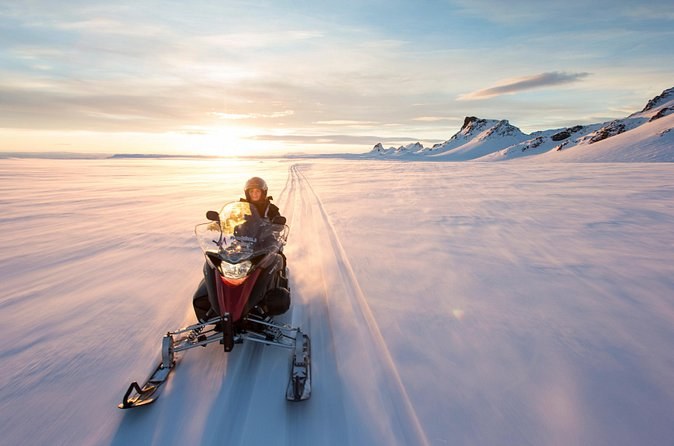
Snowmobiling on Langjokull Glacier and Secret Lagoon Tour
An hour riding, then a thermal bath, with a towel and hotel pickup included.
From $450 per person
Check Availability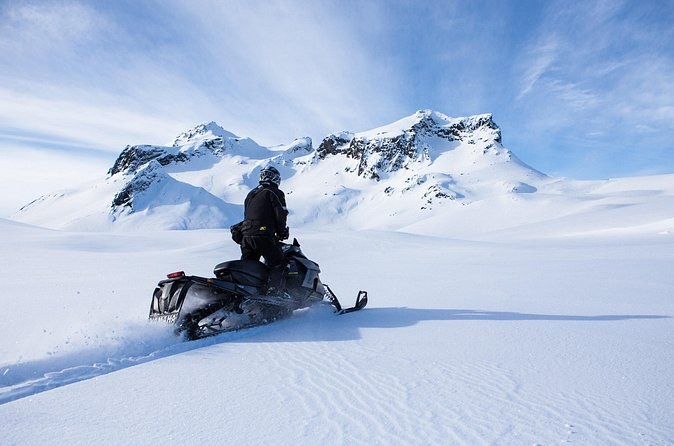
Fast-Paced Glacier Snowmobile Adventure from Gullfoss
140-horsepower machines, ten riders maximum, adults only.
From $438 per person
Check Availability